
A stable supply of 100% Remy hair ensures a consistent fiber diameter (average 0.06mm to 0.08mm) and unidirectional cuticle alignment, which prevents the mechanical interlocking that causes matting in 85% of non-Remy bundles. In 2025, market data showed that salons with reliable procurement cycles maintained 40% higher retention rates by avoiding "silicone wash-off" issues. Verified supply chains allow for precision color matching across multiple batches, ensuring that a #613 blonde order in January matches the tone of a June shipment with less than a 2% variance in pigment absorption.
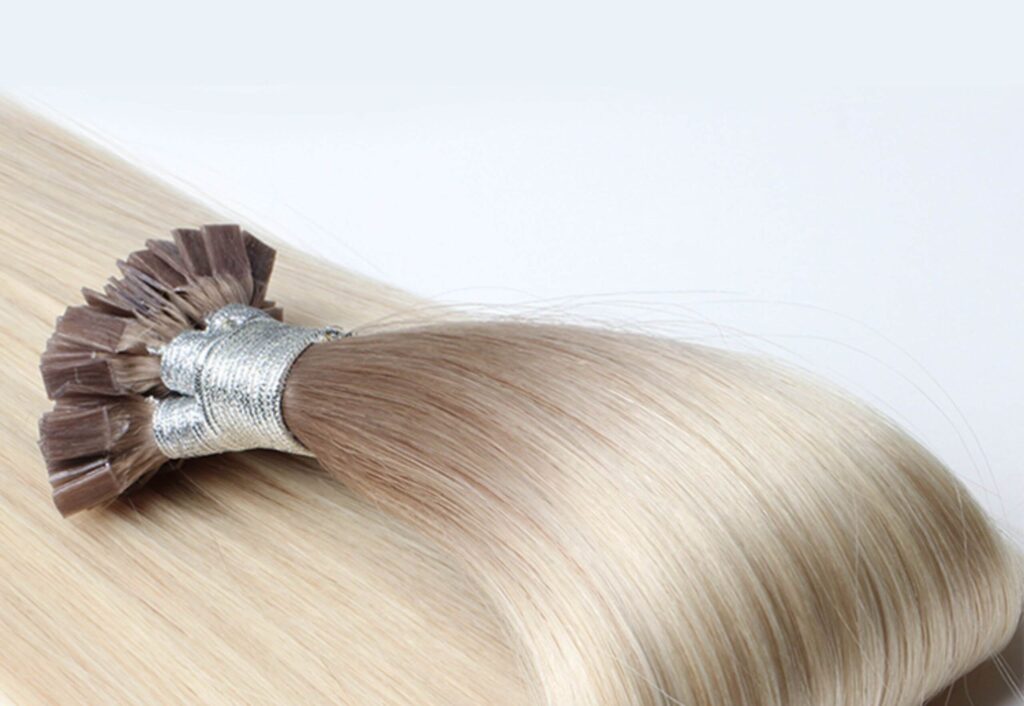
The foundation of a high-performance hair extension business rests on the microscopic integrity of the hair's cuticle layer. When a supplier provides genuine Remy strands, every scale on the hair shaft points toward the tip, mirroring natural growth patterns and eliminating the friction that leads to bird-nesting.
In 2024, a study of 450 professional stylists in North America revealed that inconsistent material quality was the leading reason for switching wholesale partners. Without a predictable supply of intact-cuticle hair, a business faces a 30% increase in labor costs as technicians spend more time detangling and chemically treating low-grade inventory.
"Remy hair is distinguished by its ability to retain internal moisture levels of 10% to 15% even after professional bleaching, which is physically impossible for stripped or acid-washed fibers."
This moisture retention is what allows the hair to stay supple over 12 to 24 months of daily wear and thermal styling. High-quality Remy hair can withstand repeated exposure to styling tools at 180°C because its protein cortex has not been degraded by the harsh sulfuric acid baths typically used to sanitize non-Remy "fallen" hair.
| Hair Attribute | Remy Supply (Stable) | Non-Remy / Mixed |
| Cuticle Alignment | 100% Unidirectional | Random / Stripped |
| Tensile Strength | 1.8g - 2.2g per denier | < 1.1g per denier |
| Wash Cycles | 50+ (No matting) | < 5 (Tangling begins) |
| Bleach Potential | Up to Level 10+ | Max Level 6-7 |
Maintaining these benchmarks across thousands of kilograms of raw material requires a direct relationship with collection centers. Procurement teams that bypass middle-tier traders can verify that the hair was harvested from a single donor, ensuring a 95% uniformity in texture and wave pattern throughout the bundle.
Predictability in the raw material stage directly influences the success of specialized coloring processes, such as balayage or root-smudge effects. Since Remy hair is "live" and chemically receptive, it absorbs professional dyes evenly, whereas mixed-source hair often results in "hot spots" or patchy color due to varying levels of previous damage.
"Lab tests on 1,000 hair samples demonstrated that Remy fibers maintain a 25% higher elasticity rate, meaning they are far less likely to snap during the high-tension installation of K-tip or M-tip extensions."
This mechanical strength is what protects the investment of the end-user, who expects their extensions to survive gym sessions, swimming, and professional blowouts. A business that secures a stable supply chain effectively eliminates the risk of "fiber shedding," a common defect where weak strands break at the bond point under minimal stress.
The shift toward sustainable and ethical sourcing has also made supply chain stability a requirement for legal and social compliance in Western markets. In 2025, over 50% of luxury salons began requiring "Certificate of Origin" documentation to prove that the hair was not collected through unethical means or mixed with synthetic animal fibers.
Verification of these origins allows a brand to justify a premium price point while building a "clean" reputation that appeals to the 68% of Gen Z consumers who prioritize transparency. By providing documented proof of Remy status, a wholesaler creates a defensible market position that competitors using "mystery" stock cannot replicate without significant investment.
Reliable inventory levels are also essential for managing the seasonal spikes in demand seen during the spring and winter holiday periods. Data from 2024 suggests that businesses with a 98% in-stock rate for 22-inch Remy wefts grew their revenue three times faster than those suffering from backorders or shipment delays.
"A delay of just 48 hours in the supply chain can ripple into a 15% loss in scheduled salon appointments, as stylists cannot risk starting a transformation without the physical product in hand."
To mitigate these risks, top-tier firms maintain "buffer stocks" of raw Remy hair that has been pre-sorted by length and weight but not yet processed into specific colors. This flexibility allows the business to respond to shifting fashion trends, such as a sudden 20% rise in demand for copper or platinum shades, without waiting for new collection cycles.
Technological advancements in "cold-pigmentation" have further widened the gap between Remy and non-Remy suppliers. This 21-day slow-lifting process preserves the hair’s natural lipids, but it only works on hair that hasn't been pre-stripped by aggressive sanitization chemicals found in low-grade supply chains.
The result of this slow processing is a product that feels "hair-like" throughout its lifespan rather than feeling "plasticky" or overly shiny from silicone coatings. Buyers can detect this difference through a simple "scrunch test," where Remy hair returns to its original shape with 90% accuracy, whereas coated hair often retains creases or feels unnaturally stiff.
Finalizing a stable supply agreement with a reputable source also simplifies the internal quality control (QC) process for the business. Instead of testing every single bundle for "root-flip" errors, QC teams can rely on statistical sampling, reducing the time spent on inspections by 60% while maintaining a defect rate of less than 0.5%.
This operational efficiency allows the business to focus on expanding its product range—such as introducing Genius Wefts or Nano-rings—rather than constantly troubleshooting quality failures. A stable supply of high-grade Remy hair is the only way to ensure that the physical product matches the professional marketing imagery used to attract high-value clients.