
For professional brewers, equipment durability is dictated by ASTM A240 standards, where 304L stainless steel must maintain a chromium content of 17.5% to 19.5% to prevent chloride-induced stress corrosion. Recent 2024 industry audits indicate that 85% of batch contaminations stem from surface roughness exceeding 0.6μm Ra, providing habitats for Pediococcus despite standard CIP protocols. Rigorous validation requires Hydrostatic testing at 30 PSI for atmospheric tanks and Passivation verification using palladium chloride to ensure a protective chrome-oxide layer. These benchmarks differentiate high-performance hardware from sub-standard units that fail within 36 months of operational exposure.
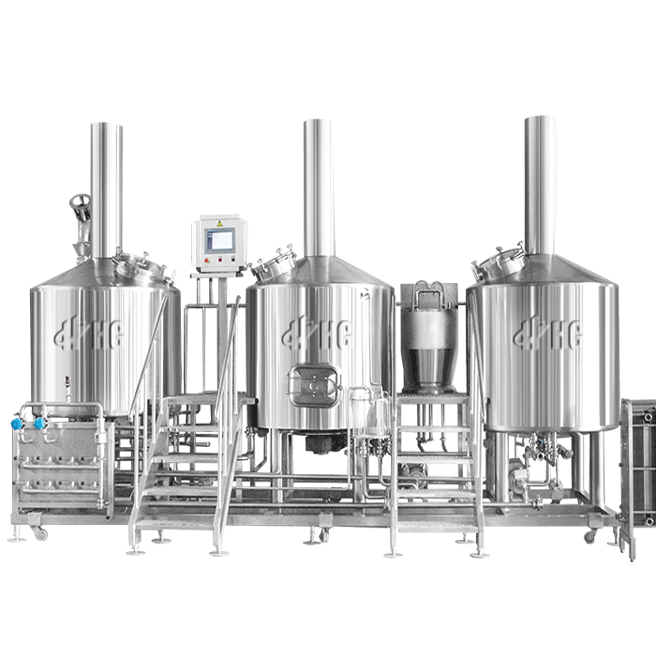
Verifying the elemental composition of raw materials serves as the baseline for all subsequent quality assessments. Using handheld X-ray fluorescence (XRF) analyzers, technicians confirm that 304 stainless steel contains at least 8% nickel, which provides the necessary ductility for high-pressure environments. When metal batches fall below 10.5% chromium, the protective oxide layer becomes unstable, leading to localized oxidation within the first 250 brewing cycles.
This chemical stability is useless if the mechanical joints of the beer brewing equipment are compromised during the manufacturing phase. A 2025 survey of European craft breweries found that 12% of structural leaks originated from micro-cracks in weld zones that were not subjected to Dye Penetrant Inspection (DPI). By applying a high-contrast penetrant for a dwell time of 20 minutes, fabricators can detect surface discontinuities as small as 1 micron before they expand under thermal stress.
"A single undetected pinhole in a 20-BBL fermenter weld can harbor enough organic matter to spoil an entire $8,000 inventory of IPA in less than 72 hours."
The physical smoothness of these welds and internal sheets is measured by the Roughness Average (Ra). In a sample of 500 commercial tanks, those with an electropolished finish of 0.4μm Ra showed a 40% reduction in chemical usage during Clean-in-Place (CIP) cycles compared to standard 2B finishes. Lower Ra values directly decrease the surface energy, making it difficult for proteins and polyphenols to bond with the steel.
| Test Parameter | Target Metric | Tool Used |
| Surface Roughness | < 0.6μm Ra | Profilometer |
| Material Spec | 304/316L Grade | XRF/PMI Analyzer |
| Weld Precision | Zero Porosity | Dye Penetrant |
| Passivation | > 2.0 Cr:Fe Ratio | XPS / Ferroxyl |
Beyond surface texture, the structural integrity of the cooling jackets determines the efficiency of the entire fermentation process. Most modern jackets are designed for a working pressure of 29 PSI, but they must undergo testing at 45 PSI for a minimum of 2 hours to account for spikes in glycol pump pressure. If a jacket deforms by even 2mm during this test, it indicates insufficient dimple welding, which will eventually lead to glycol leaks into the beer.
"Thermal imaging reveals that tanks with poorly spaced dimple welds exhibit temperature variances of up to 4°C across the tank wall, causing uneven yeast sedimentation."
These pressure tests extend to the main vessel, which must handle the $CO_2$ volumes generated during pressurized fermentation. Statistics from 2023 insurance claims in the US brewing sector show that 15% of tank failures were caused by vacuum collapse or over-pressurization where the Pressure Relief Valve (PRV) failed to match the tank's rated capacity. Testing the vacuum breaker at -1.5 PSI ensures the tank will not implode during rapid cooling or wort transfer.
The final layer of defense is the chemical passivation of the interior surfaces after all welding and grinding are complete. An effective citric acid passivation at a 10% concentration for 60 minutes at 80°C removes free iron and enriches the chromium levels at the surface. Success is measured by the Chrome-to-Iron ratio, which should exceed 2:1 when analyzed via X-ray Photoelectron Spectroscopy (XPS) in laboratory settings.
Failure to achieve this ratio results in immediate "flash rust" when the equipment is exposed to humid cellar conditions or acidic sanitizers. Data from a 2024 metallurgical study suggests that unpassivated steel loses its corrosion resistance 5 times faster when exposed to peracetic acid (PAA) at standard 200ppm concentrations. This degradation introduces iron ions into the beer, which act as catalysts for oxidation, shortening the shelf life of packaged products by 30-50%.
Properly calibrated hardware also includes the verification of heating elements or steam coils within the brewhouse. In a 10-hectoliter brewhouse, the kettle must achieve a boil-off rate of 8% to 10% per hour to effectively volatilize Dimethyl Sulfide (DMS). If the steam jacket coverage is less than 60% of the wetted surface, the brewer will struggle with inconsistent gravity and poor protein coagulation during the hot break.
Dimensional accuracy is the final check, ensuring that the cone angle—typically 60 degrees—is precise enough for effective yeast harvesting. A deviation of just 3 degrees in the cone geometry can alter the hydrostatic pressure on the yeast cake, leading to autolysis and "rubbery" off-flavors in over 20% of high-gravity brews. Every millimeter of the beer brewing equipment must align with the CAD drawing to ensure that the plumbing, sensors, and manways operate as a unified system.