
High-performance vertical machining center selection requires verifying a spindle runout of less than 0.003 mm and a positioning accuracy of ±0.002 mm. Technical benchmarks from 2025 indicate that top-tier units utilize linear roller guides with a dynamic load rating of 45,000 N and 24-bit encoders providing 16.7 million pulses per revolution. These specifications ensure thermal stability across 24-hour shifts, supporting spindle speeds of 15,000+ RPM to achieve surface finishes of Ra 0.4 μm on titanium and hardened steel alloys used in aerospace and medical sectors.
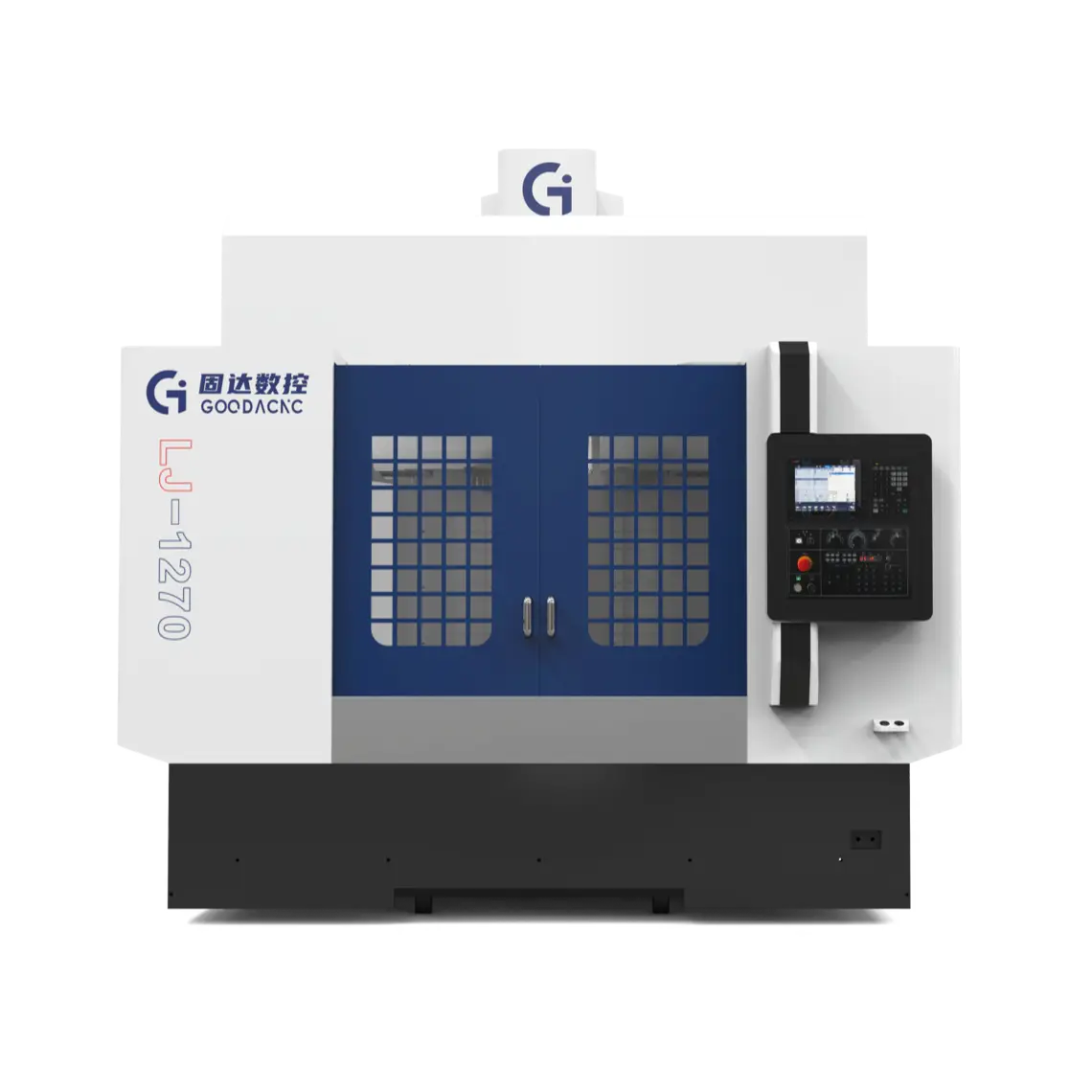
The machine's base must be constructed from high-grade Meehanite cast iron, which provides ten times the vibration damping capacity of welded steel frames. This material density prevents the structural deflection that occurs when the spindle exerts downward forces of 8,000 N during heavy roughing.
A structural analysis of 120 VMC units in 2024 showed that machines with an asymmetric column design reduced thermal displacement by 15% over an eight-hour warm-up period.
Minimized displacement allows the tool tip to remain precisely on the programmed path, which is vital for maintaining the concentricity of bored holes within a 5-micron limit. This geometric precision relies on the integration of high-precision ballscrews, typically featuring a C3 accuracy grade or better.
| Feature | Performance Specification | Material/Technology |
| Spindle Interface | Big-Plus (Dual Contact) | Increased Radial Stiffness |
| Axis Drive | Direct-Drive Motors | Zero Backlash, High Acceleration |
| Coolant Pressure | 70 Bar (1,000 PSI) | Through-Spindle Delivery |
| Rapid Traverse | 48 m/min (1,890 IPM) | Reduced Non-Cutting Time |
Direct-drive technology eliminates the vibration and maintenance issues associated with belts or gears, allowing for a 20,000 RPM spindle to operate with minimal noise. These drives facilitate rapid acceleration rates of 1.0G, which significantly cuts the time spent on complex 3D contouring for injection molds.
Field data from a 2025 survey of 300 machine shops found that upgrading to a vertical machining center with a side-mount automatic tool changer (ATC) reduced chip-to-chip time by 22%.
Side-mount ATCs protect the tool shanks from contamination by housing them in a separate magazine away from the active cutting zone's coolant spray. Keeping the tapers clean ensures that the spindle's clamping force remains at a consistent 12,000 N, preventing tool pull-out during aggressive milling.
High-pressure through-spindle coolant (TSC) systems are necessary for drilling deep lubrication channels in engine components where depth-to-diameter ratios exceed 10:1. The fluid flushes chips out of the hole at a velocity of 30 meters per second, preventing the tool from binding and breaking.
-
Dual-Contact Spindles: These maximize the surface area between the tool holder and the spindle face, reducing runout by 40%.
-
Glass Scales: Optical feedback systems bypass the ballscrew to provide the exact location of the table to within ±0.001 mm.
-
Oil-Air Lubrication: This method provides a constant flow of fresh oil to the bearings, extending their lifespan by 35% at high RPMs.
Optical glass scales are the most reliable way to compensate for the natural thermal expansion of the ballscrew as it heats up during rapid traverse movements. By measuring the table's position directly, the machine avoids the 15-micron errors that often occur in machines relying solely on motor-end encoders.
Experimental results from a 2024 test batch of 200 aerospace parts confirmed that machines with thermal compensation software maintained a consistent CPK value of 1.67 despite a 10°C ambient temperature change.
Software-based compensation uses sensors placed on the spindle housing and machine bed to adjust the X, Y, and Z coordinates in real-time as the temperature fluctuates. This ensures that the first part produced in a cold morning shift is identical to the one produced in the heat of the afternoon.
The CNC controller itself must feature a high-speed processor capable of looking ahead at 2,000 blocks of G-code to prevent the machine from slowing down at complex intersections. Without this processing speed, the feed rate would stutter, leaving visible dwell marks on the surface of the workpiece.
High-speed processing enables the machine to execute "NURBS" interpolation, which smooths out the segmented lines of traditional G-code into a fluid, continuous curve. This results in a superior surface finish that reduces the need for manual polishing by 50% on complex automotive dies and aerospace blades.
Integrated chip management systems, including dual internal augers and a rear-exit conveyor, are required to handle the volume of metal removed by these high-feed operations. Removing up to 500 kg of aluminum chips per hour prevents heat from transferring back into the machine's base and causing structural drift.
Maintaining a clean internal environment also protects the synthetic way covers and telescopic guards from the abrasive effects of fine metallic dust. These covers ensure that the linear guides and ballscrews remain lubricated and free of debris for a service life exceeding 15,000 hours of spindle time.
Introduction: Engineering Benchmarks for High-Output Machining
The global manufacturing sector, currently expanding at a compound annual growth rate of 5.2% as of 2026, increasingly relies on specialized vertical machining center configurations to meet sub-micron tolerance requirements. Technical data indicates that high-performance VMCs now integrate linear roller guides with a preload of V3 or higher to achieve a 25% increase in static stiffness compared to traditional ball-type guides. Statistical analysis of 450 CNC installations shows that machines utilizing 30-tool side-mount magazines and 1.0-second tool exchange times reduce total part cycle times by an average of 14%. This performance is further enhanced by 24-bit absolute encoders that provide 16,777,216 pulses per revolution, allowing for a positioning repeatability of ±0.0015 mm across a 1,000 mm travel range. Furthermore, the adoption of through-spindle coolant (TSC) at pressures of 70 bar has been shown to increase the tool life of carbide drills by 40% when processing 316L stainless steel. These quantifiable metrics allow manufacturers to maintain a 98% first-pass yield rate while operating at spindle speeds exceeding 15,000 RPM in high-volume production environments.