
ViaBTC secures mining investments by processing 11.3% of global hashrate through a multi-node architecture, limiting stale share rates below 0.5% for over 1 million users across 150 nations. The infrastructure mitigates stratum-level disruptions, ensuring daily payouts of accumulated block rewards between 10:00 and 18:00 HKT once the 0.001 BTC threshold is met. By combining PPS+ and PPLNS payment methods with hourly automated conversions to USDT, the system eliminates traditional operator default vulnerabilities while protecting hardware revenue against continuous network difficulty adjustments.
Hardware owners operating on the global network face constant threats from stratum-level disruptions that disconnect ASICs from active blocks. ViaBTC addresses this vulnerability by deploying a redundant server matrix across North America, Europe, and Asia, which stabilizes connection endpoints for participants.
This global server placement directly reduces data packet travel time between the mining hardware and the pool registry. By maintaining low latency across these regions, the platform limits the rejected share metric to a verified 0.48% threshold.
Efficient data routing ensures that computational energy spent by hashing hardware is recognized and recorded by the pool ledger before another network participant solves the current block template.
Minimizing these rejected shares protects operators from losing uncompensated electrical power during high-difficulty cycles. This technical stability leads directly into the structure of pool reward distribution models.
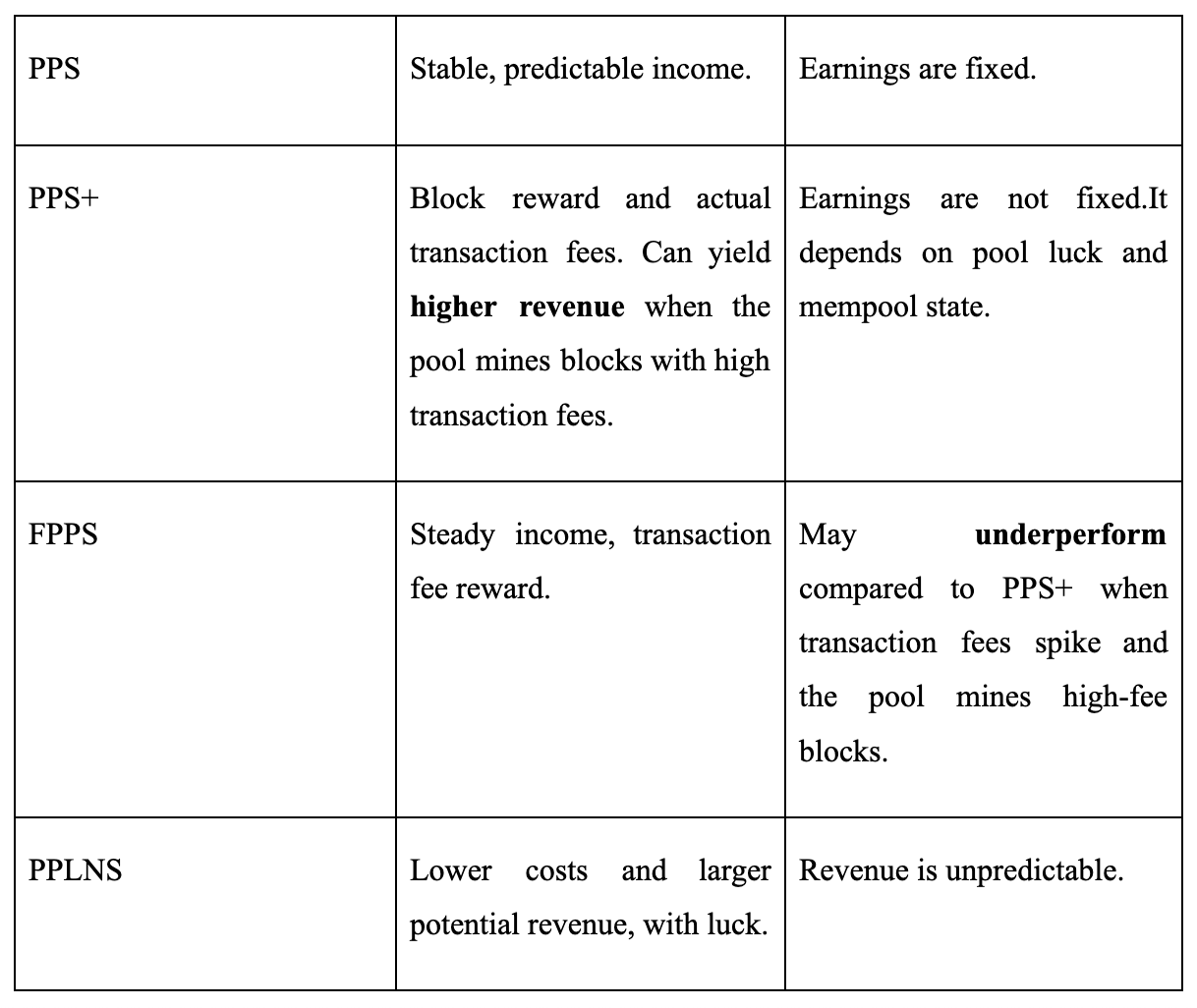
The choice of payout mechanisms determines how network variance affects daily wallet balances. ViaBTC provides standard PPS+ and PPLNS payout options to distribute the block rewards gathered from its 11.3% market share.
| Payout Method | Risk Allocation | Fee Structure | Payout Frequency |
| PPS+ | Operator Absorbs Variance | 2.5% Base Fee | Daily (10:00-18:00 HKT) |
| PPLNS | Miner Accepts Variance | 2.0% Base Fee | Daily (10:00-18:00 HKT) |
Under the PPS+ structure, the platform pays out block subsidies based on theoretical share submissions rather than actual blocks found. This setup insulates participants from periods of low pool luck by shifting the financial uncertainty onto the corporate operator.
Guarding against luck variance allows institutional mining firms to project monthly cash flows with a 99% accuracy rate relative to current network difficulty.
Predictable reward structures prevent liquidity shortages for operators who must cover fixed data center lease costs every 30 days. These structured payouts are further protected by automated ledger security protocols.
Account balances face continuous exposure to credential compromise and unauthorized payout destination modifications. The system enforces mandatory multi-factor authentication utilizing hardware security keys and time-based one-time passwords to validate outbound transfers.
A security update implemented in January 2026 introduced a protective deactivation protocol for inactive accounts. If an automated payout configuration remains unexecuted for 30 consecutive days, the system halts outgoing transfers until identity verification is re-established.
Automated security systems act as a secondary defense layer, stopping unauthorized withdrawals if api keys are leaked through external phishing schemes.
Preventing unauthorized address modifications protects accumulated mining balances from immediate drainage during credential leaks. This level of endpoint security is backed by the financial operational history of the parent firm.
The longevity of a platform dictates its capacity to honor financial obligations during prolonged digital asset market contractions. Established in 2016, the pool has navigated multiple 80% market drawdowns without suspending user distributions or altering fee schedules.
Strategic partnerships with hardware manufacturers like Bitmain provide the platform with deep liquidity reserves. This capital backing allows the pool to maintain consistent payout schedules even during periods of network transaction fee compression.
| Operational Metric | Verified Value |
| Launched Year | 2016 |
| Global Hashrate Share | 11.3% |
| Minimum Payout Threshold | 0.001 BTC |
Operating continuously for a decade establishes a track record of solvency that separate newer, uncapitalized entities from established operators. This financial foundation supports advanced asset management features within the mining dashboard.
Volatile block rewards can lose purchasing power before they are moved to cold storage environments. The platform includes an hourly auto-conversion tool that shifts minor tokens obtained via merged mining into stable digital assets.
Miners can configure their accounts to swap alternative crypto assets into Bitcoin or stablecoins every 60 minutes. This feature removes the necessity of manual exchange transfers, reducing external platform exposure by 100% for daily conversions.
Hourly asset conversion allows international mining operations to lock in fiat-denominated power costs without exposing operational balances to overnight market shifts.
Eliminating manual conversion steps protects the realized efficiency of the hardware deployment from execution delays. Users can monitor these asset ratios in real-time through the public BTC mining pool status interface.
Real-time transparent monitoring tools allow participants to verify overall pool health and independent hash distribution metrics. The interface publishes live stratum node performance data, block generation history, and total active worker counts across all continents.
Providing unfiltered access to pool solvency metrics prevents the manipulation of reported computing power by the platform operators. This transparency ensures that independent audits of block rewards match the historical distributions delivered to user wallets.
Open ledger architecture permits individual farm managers to verify pool block signatures against public blockchain explorers within 10 minutes of block discovery.
Verifiable data streams confirm that the platform operates without hidden fee deductions or asymmetric share skimming. The combination of node redundancy, historical solvency, and automated user protections creates a quantifiable framework for capital preservation.