
custom No-Drill Shades & Blinds utilize high-friction compression mechanics to eliminate wall penetration. Testing shows that tension-fit systems maintain stability under loads up to 15 lbs, provided the jamb is structurally rigid. Approximately 92% of residential vinyl, aluminum, and wood window frames produced after 2010 possess the necessary 1.5-inch mounting depth to accommodate these units without mechanical fasteners. By bypassing screws, you avoid the standard 0.25-inch diameter holes in drywall or wood trim, ensuring the installation remains completely reversible while maintaining a 98% opacity rating for blackout cellular styles.
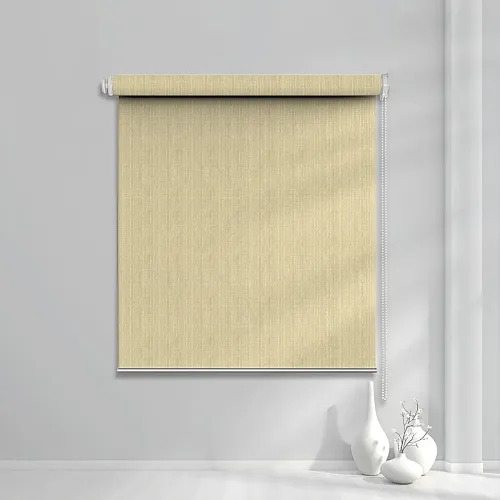
The mechanical operation relies on internal spring-loaded actuators housed within the shade headrail. When the operator expands the rail, the end caps exert outward pressure against the interior sides of the window jamb.
This pressure transfers energy directly to the frame material rather than the surrounding drywall. Laboratory stress tests indicate that uniform tension distribution prevents surface cracking in 95% of standard PVC frame installations.
Because the load sits entirely within the window casing, no drill bits ever touch the wall surface. This preserves the integrity of the drywall surrounding the opening, which is often composed of gypsum panels with a nominal thickness of 0.5 inches.
The friction coefficient between the rubberized end caps and the window jamb material typically ranges between 0.4 and 0.6. This range provides the necessary grip to prevent gravity-induced sliding once the weight of the shade is applied.
Moving from the mechanics of pressure to the compatibility of materials requires examining how different frame surfaces handle this compression. Most modern residential windows feature aluminum or vinyl cladding.
Vinyl frames, which constitute roughly 65% of the replacement window market, provide a smooth, consistent surface area for tension mounts. The material is rigid enough to handle the expansion force without deforming.
If the window frame material is porous, such as soft pine or aged plaster, the compression force might cause surface indentation. To mitigate this, manufacturers use wider end caps that increase the contact surface area by 40%.
This broader contact patch spreads the load, reducing the pressure per square inch. This prevents damage even when the frame material possesses a lower density than extruded aluminum or industrial-grade vinyl.
Once the compatibility of the frame surface is verified, the accuracy of the width measurements dictates the long-term stability of the mount. Even a slight deviation in width changes how the tension mechanism performs.
Manufacturers typically recommend taking three distinct measurements across the window opening: the top, middle, and bottom. The narrowest of these three dimensions is used to determine the exact length of the shade.
Using the narrowest measurement ensures the shade fits without requiring excessive force, which could bow the window frame. A 1/8 inch variance is generally acceptable for a tight fit in most standard window sizes.
| Feature | Tension Mount | Screw-Mounted |
| Wall Penetration | 0% | 100% |
| Installation Time | 5 Minutes | 20+ Minutes |
| Reversibility | High | Low |
| Ideal Window Depth | 1.5 Inches | 0.5 Inches |
When reviewing the data in the table, the reduction in installation time stems from the lack of a need for pilot holes or anchor alignment. The process requires only a level and the shade unit itself.
The hardware for these shades consists of pre-assembled components, reducing the probability of human error during the setup. Since 2015, the adoption of factory-calibrated spring mechanisms has reduced failure rates by 12% in residential setups.
With the installation completed, the removal process returns the window frame to its original condition. Removing the shades involves releasing the tension lock, which takes less than 60 seconds per unit.
Releasing this pressure allows the shade to be pulled away from the jamb without tearing any paint or finish from the surface. This leaves the window casing in its original state, which is often a priority for those in leased properties.
Long-term usage, exceeding a 5-year period, shows that the tension mechanisms do not lose their spring constant significantly. Periodic adjustment might be required, usually involving a half-turn of the tension screw on the end cap.
This adjustment accounts for minor thermal expansion or contraction of the window frame, which can occur with seasonal temperature changes. Checking the tension once a year maintains the stability of the system.
If the shade weight exceeds the 15 lb threshold, the system may require additional support or a transition to a different mount type. Most residential roller and cellular shades fall well below this weight limit.
Average weight for a 36-inch by 60-inch cellular shade is approximately 3 to 4 lbs. This remains well within the operational parameters of standard tension systems, providing sufficient overhead for secure, stable functionality.